
Saturday, June 29, 2013

Wednesday, June 26, 2013
Fraisse division 82 Pere-Lachaise
Thee something engaging about this young woman with her head buried in her hands, mourning and in obvious anguish. Perhaps its the subtle reliefs of her dress that catch the eye and the breath.

Monday, June 24, 2013
Stephen Sinding (1846_1922) division 82 Pere-Lachaise
Stephen Sinding, sculptor. Statue L'Angelus by Sinding.

Saturday, June 22, 2013

Wednesday, June 19, 2013
Joseph Croce-Spinelli and Theodore Sivel division 71 Pere-Lachaise
Joseph Croce-Spinelli (1843-1875) and Theodore Henri Sivel (1834-1875) died of asphyxiation when their balloon ascended too high. A third man, Gaston Tissandier (1843-1899), survived and is buried in division 27. Sculpture by Alphonse Dumilatre (1844-1923). These two men who died together so high above the earth's surface, now rest together hand-in-hand.


Monday, June 17, 2013
Adelaïde Herbemont Moris (1802-1875) division 70 Pere-Lachaise
"The Last Goodbye" by Léopold Morice (1846-1920).

Saturday, June 15, 2013
Pierre Dorian (1814-1873) division 70 Pere-Lachaise
Sculpture by Aime Millet (1819-1891), buried in Montmartre Cemetery.

Wednesday, June 12, 2013
Joaquin Maria de Errazu (died 1871) division 68 Pere-Lachaise
Little is known about Joaquin de Errazu, other than he left this enormously powerful collection of sculptures over this substantial tomb. Sculptures by Meunier:


Monday, June 10, 2013
Memorial to the Soldiers who died during the Siege of Paris division 64 Pere-Lachaise
This memorial consists of four statues, representing: La garde mobile by Lefvre, l’Artilleur by Power, le Fusilier marin and Soldat de la lign both by Schroeder.


Saturday, June 08, 2013
Elisa Hodgson (1818-1882) division 67 Pere-Lachaise
The Vicomtesse de Beauchesne; effigy by Antonino.

Wednesday, June 05, 2013
Anatole de LaForge (1821-1892) division 66 Pere-Lachaise
Politician. Bronze sculpture by Louis-Ernest Barrias (1841-1905, buried in Passy Cemetery, and designed by Gerharht, is part of a unique collection of sculptures at the tip of division 66.

Monday, June 03, 2013

Saturday, June 01, 2013
Lucien Gibert (1904-1988) division 61 Pere-Lachaise
Sculptor. And you can't miss the spark and energy of Remina Maggiori right next door. . .

Friday, May 31, 2013
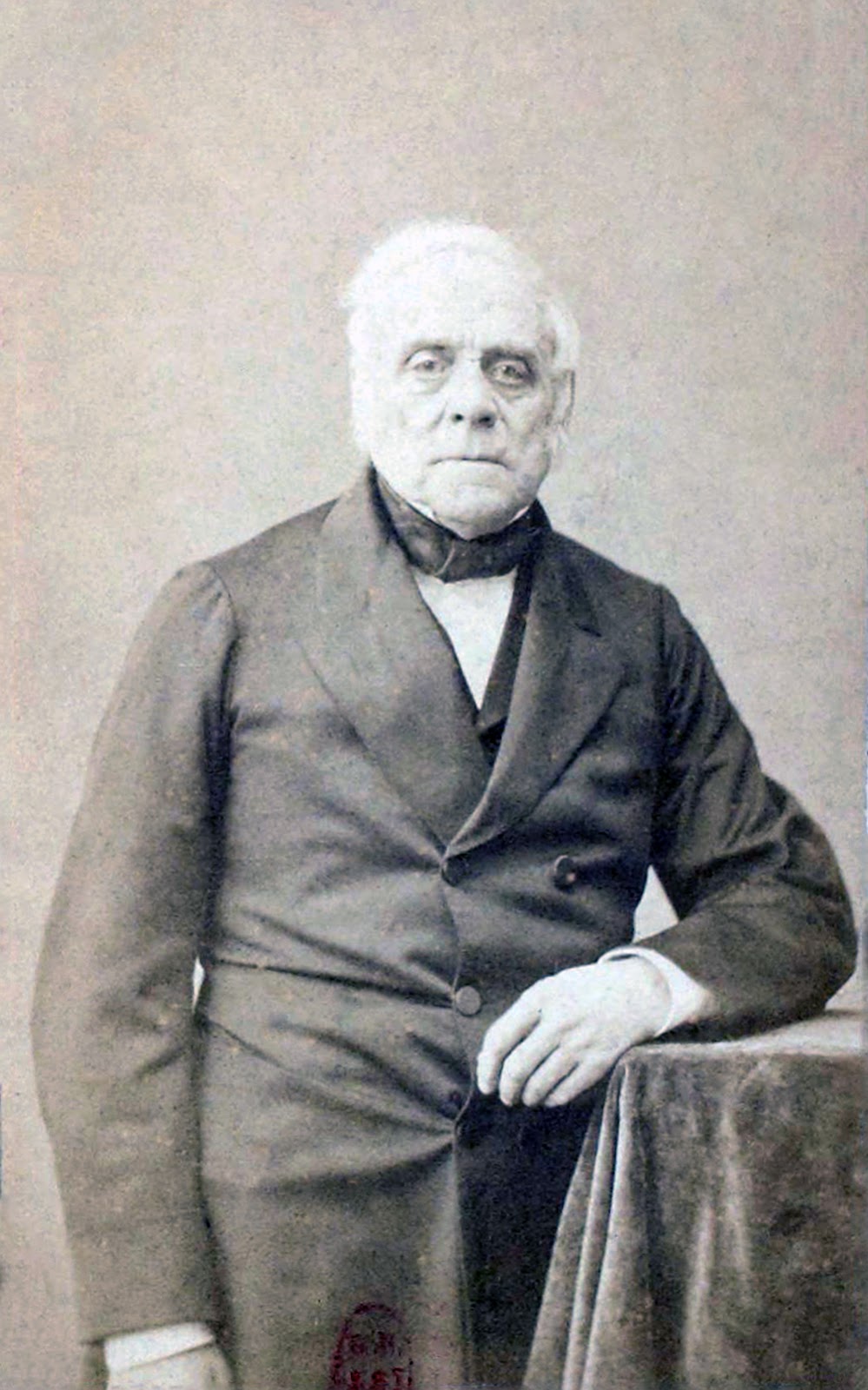
Daniel Esprit Auber - division 4 Pere-Lachaise
 |
| from Monumens Funeraires choisis Dans Les Cimetieres de Paris by Normand (1832) |
Wednesday, May 29, 2013
Stephen Sharnof's "Restless Peace" is a stunning collection of photos taken in several Paris Cemeteries, images intermixed with touching epitaphs and hints of life stories long passed away into dust. The eery fact that the book's mood grew directly from his own sense of sorrow and anguish at the loss of his wife make it even more touching.
But there are several nagging problems.
One is the book's layout. Sharnoff tells us that the book is designed according to certain themes. Fine. But his themes, as noted in the Table of Contents, don't flow well -- at least form my point of view. The chapter called "Loss and Mourning" makes little sense to me -- we are after all in a cemetery where loss and mourning is everywhere. And what does "First Views" mean exactly? or " Paris Responds," both seem somewhat confusing as their respective intent.
On the other hand, other chapters make very clear sense since they fit tomb styles: "Fragments" (one of his most touching sections) and"Stained Glass," although at the end of the latter his places a reference and quote from Philippe Aries near the end for no apparent reason. I also get "Beauty and Humor." But why not add a brief paragraph or two introducing and explaining each "theme" or section? anything that gives the reader an idea of what the author is driving at in providing us a glimpse of such powerful imagery.
The author does warn us that this is not a guidebook and I'm certainly fine with that. But I'm a bit perplexed by his overall structure nonetheless. Let me explain.
While his early section on epitaphs are incredibly moving, they bear little relation (as far as we're told) to any specific grave or cemetery. also he has a brief somewhat disjointed introduction to Pere-Lachaise but doesn't mention any other cemetery in detail.
This raises my second issue. Some graves are mentioned by name, while most are not. We have no idea which cemetery they're located in or any other details for that matter. In fact, the title notwithstanding, most of these images could have come from any one of a dozen major European cemeteries.
Yet, on the one hand, he's eager to share the graphic poignancy underlying a certain grave but then doesn't follow through on the rest of the story.
His approach is an unsettling hybrid of stream-of-consciousness with the occasional glimpse of order and structure. It's neither one thing nor the other.
Third, and related to the second issue, there are several simple mistakes that could only have been resolved with a more detailed understanding of the graves he photographed.
1. The photo his lists as "Baudelaire's grave" on pp. 187-88 is in fact a cenotaph to Baudelaire who is buried with his mother and step-father in division 6 Montparnasse grande (the cemetery itself isn't even mentioned).
2. The photo listed as Charles Lafont is not Lafont at all but Ferdinand Arbelot buried in division 11 Pere-Lachaise; Lafont is nearby in division 12. He did get the epitaph for Arbelot correct, however.
3. The "erotic statue" listed on p. 50 is indeed "powerful" and "disturbing," and while he tells us it's in Passy Cemetery, he doesn't tell us to whom it belongs. Sadly, that statue was destroyed in 2004 and the grave itself taken over by a different family altogether.
4. For some odd reason the text color changes occasionally and for no apparent reason; sometimes black, sometimes brown.
5. The quality of the paper used is not photo quality undermining the value of this work as a "photo book."
Lastly, I wonder how many and which cemeteries Stephen did visit. From what I can see he paid close attention to Pere-Lachaise, Montparnasse grande, and Passy, but did he visit Montmartre, St. vincent, Picpus, or the Pantheon, Invalides? We don't know.
This is a pleasant book to pick up and open to just about any page and simply appreciate the photography at face value -- but it is little more than that. The author hints at things he might have wanted to do -- and his extensive research on the epitaphs are just one example of where this could've gone -- but there is little meat here to hold the attention or inspire one to track down such beautiful sculpture.
More than 1.5 million people visit Pere-Lachaise each year. According to a recent survey on Trip Advisor the cemetery ranks no. 24 out of 557 attractions in Paris. Stephen does warn us his work is not a guidebook but is it not inspirational? If you were planning a trip to Paris would you not want to track down and see for yourself if not photograph some of that fantastic artwork?
At the very least he should have provided a modicum of information on each photo -- if nothing else he could have at least told us where each photo was taken and, preferably, whose grave it was as well. iIf he didn't want to interrupt his flow of visual thought, he could have done that in a list of photo credits at the end of the book.
There are so few books on Paris cemeteries available in English that I would have loved to give Stephen's book a glowing review. Sadly, I cannot.
But there are several nagging problems.
One is the book's layout. Sharnoff tells us that the book is designed according to certain themes. Fine. But his themes, as noted in the Table of Contents, don't flow well -- at least form my point of view. The chapter called "Loss and Mourning" makes little sense to me -- we are after all in a cemetery where loss and mourning is everywhere. And what does "First Views" mean exactly? or " Paris Responds," both seem somewhat confusing as their respective intent.
On the other hand, other chapters make very clear sense since they fit tomb styles: "Fragments" (one of his most touching sections) and"Stained Glass," although at the end of the latter his places a reference and quote from Philippe Aries near the end for no apparent reason. I also get "Beauty and Humor." But why not add a brief paragraph or two introducing and explaining each "theme" or section? anything that gives the reader an idea of what the author is driving at in providing us a glimpse of such powerful imagery.
The author does warn us that this is not a guidebook and I'm certainly fine with that. But I'm a bit perplexed by his overall structure nonetheless. Let me explain.
While his early section on epitaphs are incredibly moving, they bear little relation (as far as we're told) to any specific grave or cemetery. also he has a brief somewhat disjointed introduction to Pere-Lachaise but doesn't mention any other cemetery in detail.
This raises my second issue. Some graves are mentioned by name, while most are not. We have no idea which cemetery they're located in or any other details for that matter. In fact, the title notwithstanding, most of these images could have come from any one of a dozen major European cemeteries.
Yet, on the one hand, he's eager to share the graphic poignancy underlying a certain grave but then doesn't follow through on the rest of the story.
His approach is an unsettling hybrid of stream-of-consciousness with the occasional glimpse of order and structure. It's neither one thing nor the other.
Third, and related to the second issue, there are several simple mistakes that could only have been resolved with a more detailed understanding of the graves he photographed.
1. The photo his lists as "Baudelaire's grave" on pp. 187-88 is in fact a cenotaph to Baudelaire who is buried with his mother and step-father in division 6 Montparnasse grande (the cemetery itself isn't even mentioned).
2. The photo listed as Charles Lafont is not Lafont at all but Ferdinand Arbelot buried in division 11 Pere-Lachaise; Lafont is nearby in division 12. He did get the epitaph for Arbelot correct, however.
3. The "erotic statue" listed on p. 50 is indeed "powerful" and "disturbing," and while he tells us it's in Passy Cemetery, he doesn't tell us to whom it belongs. Sadly, that statue was destroyed in 2004 and the grave itself taken over by a different family altogether.
4. For some odd reason the text color changes occasionally and for no apparent reason; sometimes black, sometimes brown.
5. The quality of the paper used is not photo quality undermining the value of this work as a "photo book."
Lastly, I wonder how many and which cemeteries Stephen did visit. From what I can see he paid close attention to Pere-Lachaise, Montparnasse grande, and Passy, but did he visit Montmartre, St. vincent, Picpus, or the Pantheon, Invalides? We don't know.
This is a pleasant book to pick up and open to just about any page and simply appreciate the photography at face value -- but it is little more than that. The author hints at things he might have wanted to do -- and his extensive research on the epitaphs are just one example of where this could've gone -- but there is little meat here to hold the attention or inspire one to track down such beautiful sculpture.
More than 1.5 million people visit Pere-Lachaise each year. According to a recent survey on Trip Advisor the cemetery ranks no. 24 out of 557 attractions in Paris. Stephen does warn us his work is not a guidebook but is it not inspirational? If you were planning a trip to Paris would you not want to track down and see for yourself if not photograph some of that fantastic artwork?
At the very least he should have provided a modicum of information on each photo -- if nothing else he could have at least told us where each photo was taken and, preferably, whose grave it was as well. iIf he didn't want to interrupt his flow of visual thought, he could have done that in a list of photo credits at the end of the book.
There are so few books on Paris cemeteries available in English that I would have loved to give Stephen's book a glowing review. Sadly, I cannot.
d'Ornano division 59 Pere-Lachaise
While it may be quietly argued that these two are simply preparing to open the door for you, I like to think they are actually reaching out for each other. What do you think?

Monday, May 27, 2013
Antoine Gaétan Guerinot (1830-1891) division 55 Pere-Lachaise
Architect. Sculpture by Louis-Ernest Barrias (1841-1905), buried in Passy Cemetery.

Saturday, May 25, 2013
Radusic division 54 Pere-Lachaise
What's curious about this particular young woman is that she doesn't appear sad at all, only contemplative. It's as if she's waiting for a bus whiling away her time thinking about someone or something of interest.

Wednesday, May 22, 2013
Reifenberg division 53 Pere-Lachaise
One of the more striking, unique and puzzling sculptures in Pere-Lachaise. Appearing to be half-finished it has always struck me as the woman is coming out of (or disappearing into?) the stone. Either way, I find it most engaging -- and continue to wonder just who was this most curious "Reifenberg". . .

Monday, May 20, 2013
Ferdinand Barbedienne (1810-1892) division 53 Pere-Lachaise
Owner of one of the more well-known Paris foundries for casting sculptures, bust by Chapu and statues by Boucher.


Subscribe to:
Posts (Atom)